
There is something about leaving work when it is already dark that can make the day feel shorter than it really was. The evening seems to arrive before we are ready for it. Activities that felt easy during the summer may suddenly require more effort, and even familiar routines can begin to feel different.
When daylight saving time ends each fall, we turn our clocks back one hour. Although this gives us an extra hour on the clock that morning, it also means the sun sets an hour earlier by the clock. Combined with the naturally shortening days of autumn, the change can affect how we sleep, how energetic we feel, and sometimes our mood.
If you notice that shorter days leave you feeling tired, less motivated, or a little down, there are understandable reasons for those changes. There are also practical ways to make the transition easier.
Why Does the Time Change Affect How We Feel?
Our bodies follow a natural 24-hour cycle called the circadian rhythm. This internal clock helps regulate sleep, alertness, hormone activity, and other daily functions.
Light is one of the strongest signals that keeps this clock on schedule. Morning sunlight helps tell the brain that it is time to be awake, while darkness helps prepare the body for sleep.
When the clocks change, the timing of sunlight shifts relative to our daily schedules. At the same time, autumn brings fewer total hours of daylight.
These changes can temporarily affect sleep patterns and alertness. Research also suggests that changes in light exposure and circadian rhythms can influence emotional well-being (Wong & Hittle, 2022).
Not everyone experiences the transition in the same way. Some people barely notice it, while others find themselves struggling with fatigue, disrupted sleep, or a change in mood.
Why Shorter Days Can Feel Emotionally Difficult
The effects of fading daylight are not always limited to sleep.
For many people, sunlight is connected to activities that support emotional well-being. We may spend more time outdoors, exercise after work, visit neighbors, or enjoy a walk before dinner.
When darkness arrives earlier, some of those opportunities become less convenient.
You might notice that:
- You feel more tired in the late afternoon.
- Your motivation decreases after sunset.
- You spend less time outside.
- You feel less interested in social activities.
- You have difficulty maintaining your usual exercise routine.
- Your mood feels lower than it did during the warmer months.
Some of these changes may reflect the body’s response to shifting daylight. Others may be related to changes in daily habits, social connection, and activity.
It is also possible to miss the longer days of summer without experiencing a mental health condition.
Recognizing that seasonal changes can affect both our bodies and our routines may help us respond with greater patience and understanding.
Seven Ways to Cope With the Time Change and Shorter Days
1. Make Morning Light a Priority
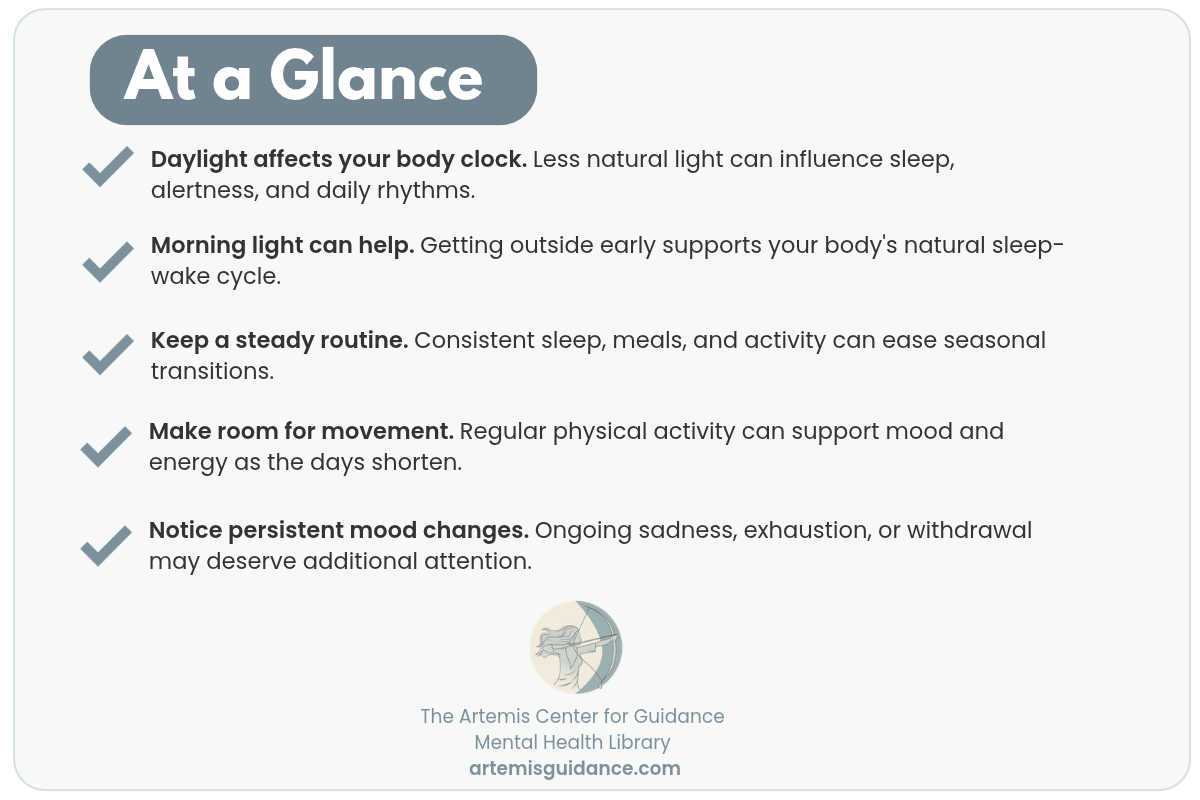
One of the simplest ways to support your internal clock is to get natural light early in the day.
Morning light helps regulate circadian rhythms and supports alertness (Wong & Hittle, 2022).
Consider drinking your morning coffee outside, taking a short walk, or spending a few minutes outdoors before beginning your day.
Even on cloudy days, outdoor light can be beneficial.
If mornings are particularly busy, look for small opportunities rather than feeling pressured to create an elaborate routine.
2. Maintain a Consistent Sleep Schedule
Although the fall time change may provide an extra hour of sleep, your body does not necessarily adjust immediately.
You might wake earlier than usual, become sleepy before your normal bedtime, or notice temporary changes in sleep quality.
Try to maintain consistent bedtime and wake-up times, including on weekends.
A predictable schedule helps reinforce your body’s natural rhythms. Limiting caffeine late in the day and reducing bright light before bedtime may also support better sleep (Wong & Hittle, 2022).
If your sleep feels a little different during the first several days after the change, give yourself time to adjust.
3. Find Opportunities for Daytime Movement
Regular physical activity supports both physical and emotional health.
As daylight becomes more limited, consider adjusting when you exercise rather than abandoning the activity altogether.
A lunchtime walk, a few minutes of stretching, or an indoor activity after work can help maintain movement throughout the colder months.
Exercise does not have to be intense to be worthwhile.
The goal is to find something enjoyable and realistic enough to continue.
4. Create an Evening Routine You Enjoy
When darkness arrives earlier, evenings can begin to feel unusually long.
Rather than treating those hours as lost time, consider creating routines that make them feel comfortable and meaningful.
You might enjoy preparing dinner, reading, working on a hobby, connecting with a friend, or spending time with family.
Having something to look forward to can make the transition feel less discouraging.
It may also help to distinguish between the feeling that the day is over and the reality that there is still time available for activities you enjoy.
5. Stay Connected With Other People
Shorter days and colder weather sometimes lead people to spend more time at home.
For some, that feels peaceful and restorative. For others, it can gradually become isolating.
Maintaining social connections is an important part of emotional well-being.
Consider scheduling a regular phone call, meeting someone for coffee, or planning an activity that does not depend on daylight or warm weather.
Connection does not have to involve a large social gathering. Small, consistent interactions can be meaningful.
6. Adjust Your Expectations
One of the more frustrating parts of seasonal change is expecting ourselves to maintain exactly the same routines and energy levels throughout the year.
You may find that you prefer exercising earlier, need more time to feel alert in the morning, or have less enthusiasm for evening activities.
Some flexibility can be helpful.
Rather than interpreting every change in energy as a lack of motivation, consider whether your schedule needs an adjustment.
You can maintain healthy habits while allowing those habits to look different during the fall and winter.
7. Pay Attention to Changes in Your Mood
It is common to notice some differences in energy or motivation as the seasons change.
However, persistent sadness, loss of interest in enjoyable activities, significant fatigue, or changes in sleep and appetite deserve attention.
These symptoms can have several causes, including depression and medical conditions.
If mood changes continue, worsen, or interfere with everyday responsibilities, consider speaking with a mental health professional or healthcare provider.
You do not need to wait until symptoms become severe to ask for support.
Is It the Winter Blues or Seasonal Affective Disorder?
Many people use the phrase winter blues to describe feeling less energetic or cheerful during the colder, darker months.
For some people, however, seasonal mood changes are more significant.
Seasonal affective disorder (SAD) is a form of depression that follows a recurring seasonal pattern. The most common pattern begins in the fall or winter and improves during spring or summer.
According to the National Institute of Mental Health (NIMH, n.d.), symptoms of winter-pattern SAD may include:
- Persistent sadness or depressed mood
- Loss of interest in previously enjoyable activities
- Low energy or unusual fatigue
- Sleeping more than usual
- Changes in appetite, including increased cravings for carbohydrates
- Difficulty concentrating
- Social withdrawal
- Feelings of hopelessness or worthlessness
SAD is more than simply disliking cold weather or wishing the sun would stay out longer.
It involves depressive symptoms that affect daily functioning and follow a recurring seasonal pattern.
A mental health professional can help determine whether symptoms reflect seasonal depression, another form of depression, or a different concern.
Can Light Therapy Help With Seasonal Depression?
Light therapy is one treatment sometimes recommended for winter-pattern seasonal affective disorder.
It involves using a specially designed light box that provides bright light intended to help compensate for reduced seasonal daylight.
Research supports light therapy as a treatment option for some people with winter-pattern SAD. Psychotherapy and antidepressant medications may also be helpful (NIMH, n.d.).
However, light therapy is not appropriate for everyone. Certain eye conditions, medications, and health concerns may require additional precautions. People with bipolar disorder should also discuss light therapy with a qualified healthcare provider because it can sometimes trigger manic symptoms.
Before purchasing or beginning treatment with a light box, speak with a healthcare professional about whether it is appropriate for you.
Ordinary household lamps are not equivalent to therapeutic light boxes.
Supporting Children and Teenagers Through the Time Change
Adults are not the only ones who may notice the seasonal transition.
Children and teenagers also rely on consistent sleep schedules, physical activity, and opportunities for social connection.
Earlier sunsets can affect after-school routines, outdoor play, sports, and family activities.
Parents may find it helpful to:
- Maintain consistent bedtimes and wake-up times.
- Encourage outdoor activity during available daylight.
- Keep family routines predictable.
- Make time for enjoyable indoor activities.
- Pay attention to persistent changes in mood, sleep, or behavior.
Some children may become more tired or irritable during a schedule adjustment.
However, significant or lasting changes should not automatically be attributed to the time change.
If a child appears persistently withdrawn, sad, anxious, or unusually fatigued, a pediatrician or mental health professional can help explore what may be contributing.
Give Yourself Time to Adjust
The transition into shorter days can be difficult, particularly for people who feel energized by sunshine and outdoor activities.
There is no need to dismiss those feelings or expect yourself to adapt overnight.
Small changes, such as getting outside in the morning, maintaining a regular sleep schedule, and making room for enjoyable activities, can help support your well-being.
It is also worth remembering that the earlier sunset does not mean your day has to end earlier.
Fall and winter may call for different routines, but they can still include meaningful experiences, connection, rest, and enjoyment.
And if the darker months bring more than a temporary change in mood, reaching out for support is a reasonable and important step.
References
National Institute of Mental Health. (n.d.). Seasonal affective disorder. National Institutes of Health.
https://www.nimh.nih.gov/health/publications/seasonal-affective-disorder
National Institute for Occupational Safety and Health. (2022). Here comes the sun! Tips to adapt to daylight saving time. Centers for Disease Control and Prevention.
https://www.cdc.gov/niosh/bulletin/2022/time-change.html
National Health Service. (n.d.). Seasonal affective disorder (SAD).
https://www.nhs.uk/mental-health/conditions/seasonal-affective-disorder-sad/