
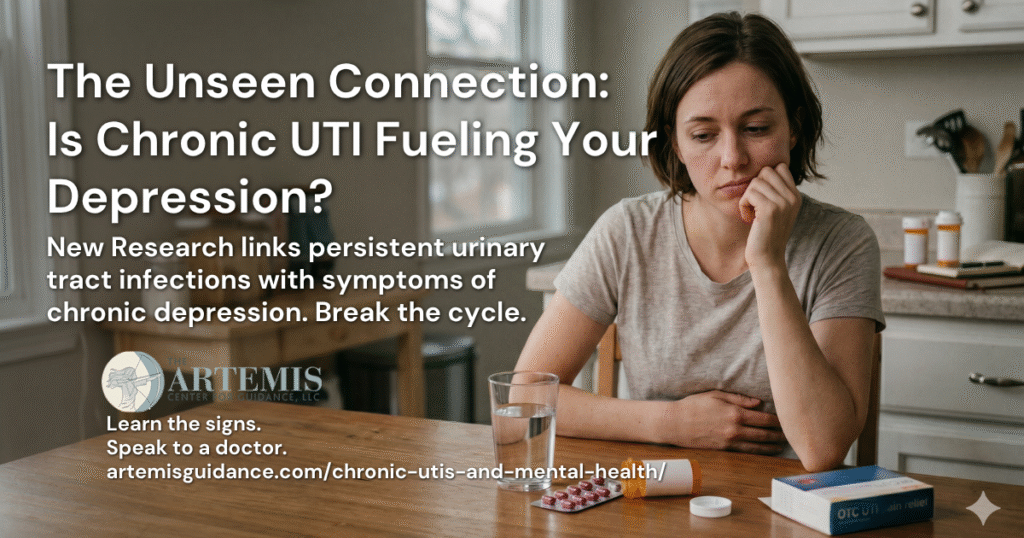
For many women, urinary tract infections are an occasional inconvenience. But for others, UTIs become recurrent, persistent, and deeply disruptive to daily life. If you experience chronic UTIs or recurrent bladder infections, you already know how exhausting they can be — physically and emotionally. What many people don’t realize is that women with chronic UTIs have significantly higher rates of anxiety and depression. Living with an unpredictable medical condition can create ongoing stress, fear of symptoms returning, and frustration with treatments that don’t seem to work. At The Artemis Center for Guidance, we understand that chronic medical conditions affect far more than your physical health. They can impact your mental health, relationships, work, and overall sense of wellbeing. Therapy can help you manage the emotional toll of living with chronic UTIs while you continue working with your medical providers.
Women dealing with recurrent urinary tract infections often describe feeling:
• Constantly worried about the next infection
• Hyper-aware of bodily sensations and symptoms
• Frustrated by repeated medical appointments and antibiotics
• Embarrassed discussing symptoms with others
• Exhausted by the disruption to daily life
• Afraid of intimacy due to symptom flare-ups
• Discouraged when treatments don’t seem to help
Over time, these experiences can lead to chronic stress, anxiety, and depression. Many women also report feeling dismissed or misunderstood, especially when infections continue despite treatment. Therapy can provide a space where your experience is taken seriously and supported.
Living with chronic bladder infections places ongoing stress on your nervous system. When symptoms repeatedly return, your brain naturally becomes more alert to possible threats. You may notice yourself:
• Monitoring your body for early signs of infection
• Avoiding activities out of fear of triggering symptoms
• Feeling tense or on edge much of the time
• Struggling to relax or feel normal again
This response is not a personal weakness. It is a natural reaction to chronic health stress. Therapy can help regulate the nervous system and reduce the cycle of health anxiety and emotional distress that often develops with chronic UTIs.
Therapy can help women living with chronic UTIs:
• Manage anxiety related to recurring infections
• Reduce depression associated with ongoing medical issues
• Process frustration with the healthcare system
• Rebuild trust in their bodies
• Improve communication with partners and family members
• Restore a sense of control and stability
Mental health care works alongside your medical treatment, helping you cope with the emotional impact of chronic illness.
Many women silently struggle with the mental health effects of recurrent UTIs. Because urinary infections are often discussed only in medical terms, the psychological burden can go unrecognized. If chronic UTIs have begun affecting your mood, anxiety, or quality of life, therapy can help you feel understood, supported, and less alone.
The Artemis Center for Guidance provides compassionate, evidence-based therapy for women experiencing the psychological effects of chronic medical conditions. Our therapists help clients address:
• Anxiety
• Depression
• Health-related stress
• Trauma related to medical experiences
• Relationship strain caused by chronic illness
Our goal is to help you feel stronger, calmer, and more supported while navigating your health challenges.
If chronic UTIs are affecting your mental health, support is available. You don’t have to carry the emotional burden alone.
Research has shown a relationship between recurrent urinary tract infections and increased rates of anxiety and depression in women. Examples include: Studies published in the International Urogynecology Journal examining psychological distress associated with recurrent UTIs. Research in Urology and BMC Urology exploring quality-of-life impacts of chronic bladder infections. Findings that recurrent UTIs significantly affect quality of life, emotional wellbeing, and sexual health. Your therapist can help address the emotional side of these experiences while you continue working with your medical providers.