

When Your Child Says They’re Fine but Seems Different
You ask your child how they’re doing.
“Fine.”
You ask if anything happened at school.
“Nothing.”
You ask whether something is bothering them.
“I’m fine, Mom.”
But something feels different.
Maybe your normally talkative child has become quiet. Your teenager spends more time alone. Your child seems irritated by ordinary questions, has stopped enjoying favorite activities, or simply doesn’t seem like themselves.
As a parent, you may find yourself wondering whether this is a normal part of growing up or a sign that something is wrong.
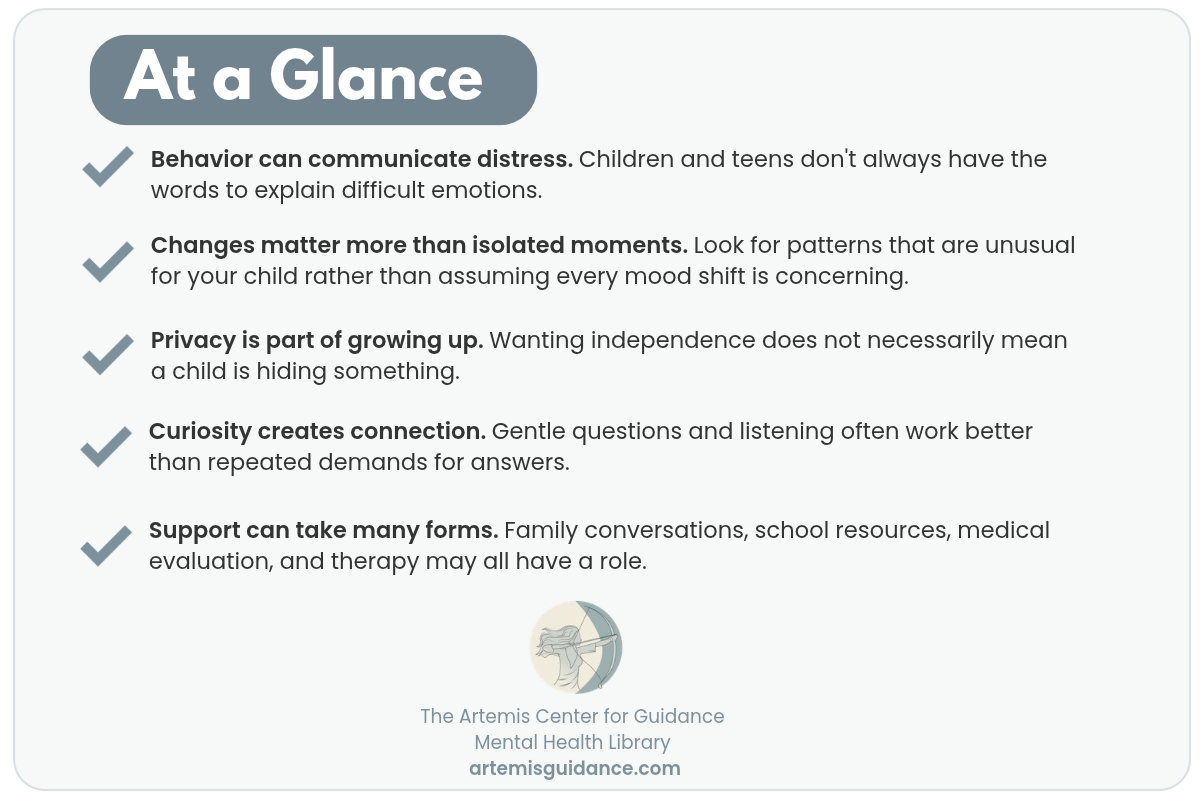
The answer isn’t always obvious. Children and teenagers experience emotional changes for many reasons, and not every change in behavior signals a mental health concern.
Still, paying attention to changes can help you understand when your child may need additional support.
Why Children Don’t Always Tell Us When Something Is Wrong
Adults sometimes assume that if a child is struggling, they’ll say so.
But children and teenagers don’t always have the words, confidence, or desire to explain what they’re experiencing.
Younger children may have difficulty identifying complicated emotions. They might recognize that they feel uncomfortable, frustrated, or upset without understanding why.
Teenagers may understand their feelings but prefer to work through them privately. They may worry about disappointing their parents, being misunderstood, losing independence, or turning a small problem into a much bigger conversation.
Sometimes, “I’m fine” really does mean everything is okay.
Other times, it might mean:
-
“I don’t know how to explain it.”
-
“I’m not ready to talk.”
-
“I don’t want you to worry.”
-
“I’m afraid you’ll be upset.”
-
“I just need some space.”
The goal isn’t to uncover a hidden meaning behind every response. It’s to create a relationship where your child knows they can talk when they need to.
Signs Your Child May Be Struggling Emotionally
According to the National Institute of Mental Health (2024), changes in mood, behavior, sleep, relationships, and school functioning can sometimes indicate that a child would benefit from further evaluation.
These signs do not automatically mean a child has a mental health disorder. They are reasons to pay attention, especially when they represent a noticeable change from the child’s usual behavior.
Changes in Mood or Irritability
Your child may seem more easily frustrated, tearful, worried, or angry than usual.
Sometimes emotional distress looks like sadness. Other times, particularly in children and adolescents, it may appear as irritability or frustration.
Consider whether these reactions are unusual for your child, how frequently they occur, and whether they interfere with everyday life.
Withdrawing From Friends or Family
Wanting privacy is a normal part of growing up.
However, a child who suddenly stops spending time with friends, avoids activities they previously enjoyed, or becomes increasingly isolated may be having a difficult time.
There is a difference between a teenager who enjoys spending time alone and one who seems to have lost interest in connecting with others.
Changes in Sleep, Appetite, or Energy
Children experiencing emotional difficulties may sleep more or less than usual, seem unusually tired, or experience changes in appetite.
These changes can also have medical, developmental, or environmental causes.
For example, adolescents naturally experience shifts in sleep patterns as they mature. Busy schedules and insufficient sleep can also affect mood and concentration.
Persistent or significant changes deserve attention and may warrant a conversation with your child’s pediatrician.
Changes in School Performance or Attendance
A child who previously enjoyed school may begin resisting attendance, struggling to concentrate, missing assignments, or experiencing declining grades.
Possible explanations include academic difficulties, learning differences, bullying, social stress, sleep problems, family circumstances, or emotional concerns.
Rather than assuming the child isn’t trying hard enough, consider what might have changed.
Physical Complaints Without an Obvious Explanation
Some children experience emotional distress through physical symptoms, including headaches or stomachaches.
These symptoms are real, even when stress or anxiety contributes to them.
Recurring physical complaints should be discussed with a healthcare professional rather than automatically attributed to emotional causes.
How Can You Tell the Difference Between Normal Development and a Mental Health Concern?
One of the most difficult parts of parenting is knowing when to intervene and when to allow a child room to grow.
Adolescence naturally involves changing relationships, stronger emotions, increasing independence, and a greater desire for privacy.
A teenager who wants to spend more time with friends than family isn’t necessarily withdrawing emotionally.
A child who has a difficult week at school isn’t necessarily experiencing a mental health disorder.
Rather than focusing on a single behavior, consider three questions.
1. Is This a Significant Change for My Child?
You know your child’s usual patterns.
A naturally quiet child may be perfectly comfortable spending time alone. A normally outgoing child who suddenly avoids everyone may deserve a closer look.
Compare your child’s behavior with their own typical functioning, not with another child or an idealized expectation.
2. How Long Has It Been Happening?
Everyone has difficult days.
A stressful exam, friendship disagreement, family transition, or disappointing experience can temporarily affect a child’s mood.
The National Institute of Mental Health (2024) recommends considering professional help when concerning emotions or behaviors last for weeks or longer, cause distress, or interfere with daily functioning.
You do not need to wait several weeks, however, if symptoms are severe, rapidly worsening, or involve safety concerns.
3. Is It Affecting Everyday Life?
Consider whether the changes are interfering with your child’s relationships, education, sleep, health, or ability to enjoy ordinary activities.
A child may still be attending school and completing assignments while struggling emotionally.
At the same time, occasional frustration or a desire for privacy does not necessarily indicate a problem.
Looking at the overall picture is usually more helpful than focusing on one isolated behavior.
How to Talk to a Child Who Keeps Saying “I’m Fine”
When parents become concerned, it’s natural to want answers.
You may find yourself asking more questions, checking in repeatedly, or trying to solve a problem before you fully understand it.
These responses usually come from love and concern. But they can sometimes make a child feel pressured.
The American Academy of Pediatrics emphasizes the importance of listening without judgment, avoiding lectures, and responding calmly when teenagers share their concerns (Ginsburg & Kinsman, 2024).
Creating opportunities for ongoing conversations can help children feel more comfortable discussing difficult experiences without pressure.
Start With an Observation, Not an Accusation
Instead of saying:
“What’s wrong with you lately?”
Try:
“I’ve noticed you’ve seemed quieter than usual this week. I wanted to check in and see how you’re doing.”
Or:
“You don’t seem to be enjoying soccer as much lately. Has something changed?”
Specific observations give your child an opportunity to respond without feeling that their behavior is being criticized.
Choose a Comfortable Moment
Not every meaningful conversation needs to happen face-to-face at the kitchen table.
Some children talk more easily while riding in the car, walking the dog, preparing dinner, or doing something together.
These ordinary moments can feel less intense than being asked to sit down for a serious discussion.
Listen Before Trying to Fix It
When your child shares something difficult, you may immediately want to offer advice.
But sometimes the most helpful first response is simply listening.
You might say:
“That sounds really frustrating.”
“I can understand why that bothered you.”
“Do you want help figuring out what to do, or would you rather I just listen right now?”
Listening doesn’t mean agreeing with everything your child says. It means making an effort to understand their experience before responding.
Related reading: How to Talk to Someone You’re Worried About — Artemis Mental Health Library.
Respect Privacy Without Withdrawing Support
Children and teenagers need opportunities to develop independence.
You don’t have to know every thought, conversation, or detail of your child’s day to maintain a close relationship.
If your child isn’t ready to talk, you might say:
“Okay. You don’t have to tell me everything right now. I care about you, and I’m here when you want to talk.”
Then continue showing interest through ordinary interactions.
Respecting privacy does not mean ignoring serious safety concerns. Parents may need to take a more active role when a child’s health or safety is at risk.
What If Your Child Still Won’t Talk?
Sometimes a parent approaches the conversation gently, listens carefully, and makes themselves available, but their child still doesn’t open up.
That can be frustrating and frightening, particularly when you’re worried.
Try not to interpret their silence as a rejection of you or proof that you’ve done something wrong.
Children may need time to understand their feelings, decide what they want to share, or find a comfortable way to communicate.
Continue offering opportunities for connection without making every interaction about their emotional state.
It may also help to ask whether there’s another trusted adult they would feel comfortable talking with, such as a relative, school counselor, pediatrician, or therapist.
The important thing is that your child has access to supportive relationships, even if you aren’t always the person they choose to confide in first.
When Should Parents Consider Professional Help?
You don’t need to wait until your child is in crisis to seek guidance.
The National Institute of Mental Health (2024) recommends beginning with a child’s healthcare provider when parents have concerns about emotional or behavioral changes. A comprehensive evaluation may include information about the child’s development, relationships, school experiences, medical history, and current functioning.
An evaluation may be especially helpful when your child:
-
Experiences ongoing sadness, anxiety, or irritability.
-
Withdraws significantly from relationships or activities.
-
Has persistent changes in sleep, appetite, or energy.
-
Struggles with school attendance or everyday functioning.
-
Experiences repeated physical complaints without a clear explanation.
-
Seems overwhelmed by emotions or has difficulty managing them.
Therapy can offer children and adolescents a supportive environment to understand their feelings, develop coping skills, and work through challenges.
Depending on the child’s age and needs, treatment may also involve parents or caregivers.
Seeking an evaluation does not mean something is necessarily wrong with your child. It means taking their well-being seriously.
Related reading: Ask for Help Before a Crisis — Artemis Mental Health Library.
When Immediate Help Is Needed
Some warning signs require a more urgent response.
If your child talks about wanting to die, expresses thoughts of suicide, engages in self-harm, or behaves in a way that creates an immediate safety concern, take it seriously.
Ask directly about their safety, remain calm, and seek appropriate professional assistance.
In the United States, the 988 Suicide & Crisis Lifeline is available by calling or texting 988. For an immediate life-threatening emergency, call 911.
Connection Matters More Than Having the Perfect Words
Parents sometimes worry that one wrong question or missed opportunity will prevent their child from opening up.
But relationships aren’t built through perfect conversations.
They’re built through everyday experiences of being listened to, respected, cared for, and supported.
Your child may not always tell you everything. They may need privacy, independence, or time to understand their own emotions.
You can respect those needs while remaining attentive to meaningful changes in their well-being.
Sometimes the most important message you can give your child is a simple one:
“You don’t have to tell me everything, but you never have to figure everything out alone.”
You may not always know exactly what your child is feeling. But your steady presence, willingness to listen, and openness to seeking help can make a meaningful difference.
References
Ginsburg, K. R., & Kinsman, S. B. (2024). How to communicate with and listen to your teen: 3 key tips. American Academy of Pediatrics, HealthyChildren.org. https://www.healthychildren.org/English/family-life/family-dynamics/communication-discipline/Pages/How-to-Communicate-with-a-Teenager.aspx
National Institute of Mental Health. (2024). Children and mental health: Is this just a stage? National Institutes of Health. https://www.nimh.nih.gov/health/publications/children-and-mental-health