

Many people hesitate to start therapy because they’re worried about privacy.
Will my therapist tell my spouse everything we discuss?
Can my employer find out I’m in therapy?
Will my parents know what I say?
Can my therapist talk to my doctor?
These are some of the most common questions we hear—and they’re important ones.
Understanding how confidentiality works can help you feel more comfortable taking that first step.
What Does Confidentiality Mean?
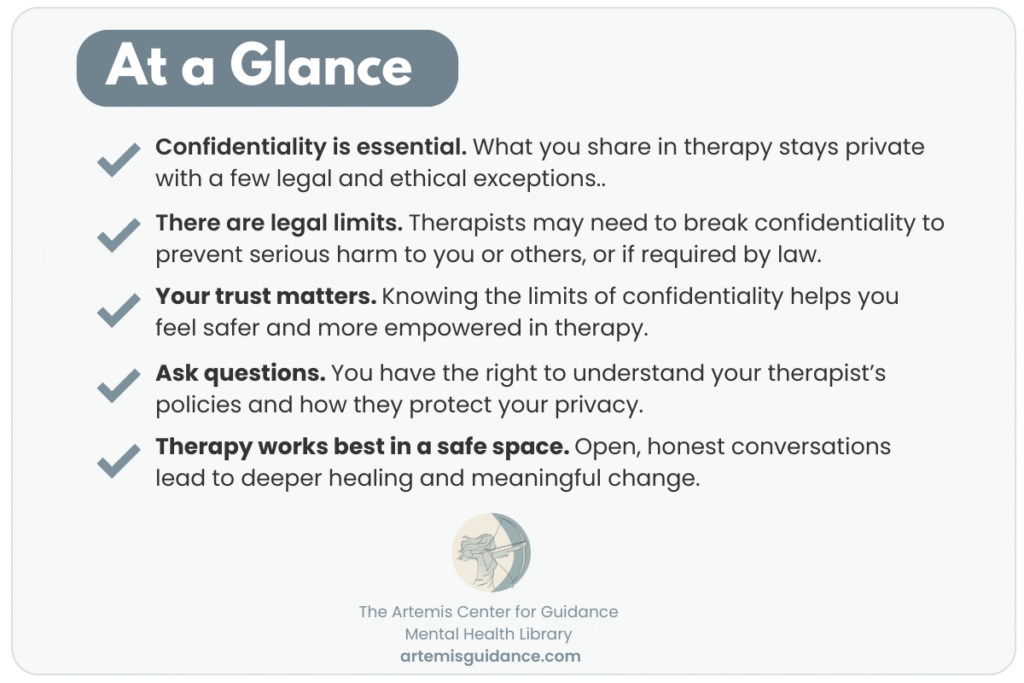
Confidentiality means that what you share in therapy is generally private.
Mental health professionals are both ethically and legally obligated to protect your personal health information. This allows therapy to become a place where you can talk openly about difficult emotions, relationships, life experiences, and personal struggles without worrying that your conversations will routinely be shared with others.
Confidentiality isn’t simply a professional courtesy—it’s one of the foundations of effective therapy.
Why Confidentiality Matters
Therapy works best when people feel safe enough to be honest.
Many people begin therapy carrying shame, fear, embarrassment, or uncertainty. Others worry they’ll be judged or that someone they love will find out what they’ve shared.
Knowing that your therapist is committed to protecting your privacy helps build the trust that meaningful therapy depends on.
Are There Any Exceptions?
Yes.
Although confidentiality is very strong, there are a few situations where therapists may be legally or ethically required to disclose information.
These situations generally involve protecting someone’s safety or complying with the law.
Examples may include:
- An imminent risk that someone may seriously harm themselves.
- An imminent risk that someone may seriously harm another person.
- Suspected child abuse or neglect.
- Suspected abuse or neglect of a vulnerable adult when reporting is required by law.
- A valid court order or another legal requirement.
Your therapist will review these exceptions with you during your first appointment and answer any questions you have.
Can My Therapist Talk to My Family?
Yes—but generally only with your permission.
Many clients find it helpful to involve a spouse, partner, parent, or another trusted family member in their care.
If you would like your therapist to communicate with someone involved in your treatment, you’ll simply complete a written Release of Information (ROI). This document tells us:
- Who we may speak with.
- What information may be shared.
- The purpose of the communication.
Unless another legal exception applies, we will not share your protected health information without your authorization.
Can My Therapist Speak With My Doctor or Another Healthcare Provider?
Absolutely—and sometimes it’s very helpful.
With your written permission, your therapist can coordinate care with providers such as:
- Your primary care physician
- Your psychiatrist
- Another therapist
- A pediatrician
- Other healthcare professionals involved in your care
Coordinating care helps ensure everyone involved in your treatment is working toward the same goals and can improve communication between members of your healthcare team.
Again, these conversations generally occur only after you’ve signed a Release of Information authorizing us to do so.
Confidentiality for Teenagers in New Jersey
Confidentiality often raises additional questions when an adolescent is receiving therapy.
At The Artemis Center for Guidance, we believe teenagers need enough privacy to develop an honest, trusting relationship with their therapist while also recognizing that parents and guardians play an essential role in supporting their child’s well-being.
New Jersey law provides important privacy protections for adolescents receiving mental health treatment. In many situations, adolescents who are 14 years of age or older have significant confidentiality protections regarding their mental health treatment. In addition, many adolescents who are 16 years of age or older may consent to their own temporary outpatient mental health treatment (excluding medication), subject to the requirements of New Jersey law.
What does this mean in practice?
Therapy is not intended to become a place where parents receive a detailed report of every conversation. Instead, therapists work to balance a teenager’s right to privacy with a parent’s important role in supporting treatment.
At the beginning of therapy, we discuss confidentiality with both parents (or guardians) and teenagers. We explain:
- What information will generally remain private.
- When parents will be included in treatment.
- Situations that require us to involve parents or others to help keep a young person safe.
Our goal is not to create secrets within families.
Our goal is to create enough privacy for teenagers to speak honestly while encouraging healthy communication between teens, parents, and therapists whenever possible.
If you’re using health insurance, your insurance company generally receives only the information necessary to process your claim, such as diagnosis codes, dates of service, and billing information. They do not receive recordings or transcripts of your therapy sessions.
If you have questions about what information your insurance company receives, your therapist can help explain the process.
Can My Insurance Company Access My Therapy Records?
If you choose to use health insurance to pay for therapy, you are authorizing your therapist to share certain clinical information with your insurance company as required to process claims, obtain authorization when necessary, and demonstrate that treatment is medically necessary. This is part of the agreement you have with your health insurance plan.
At The Artemis Center for Guidance, we believe your privacy matters. We document your care thoughtfully and professionally while striving to include only the information necessary to support your treatment and meet insurance requirements. If your insurance company requests clinical records, we disclose only the information required for the specific purpose requested.
If you have questions about how your information may be shared when using insurance—or if maintaining the greatest possible level of privacy is important to you—please talk with your therapist. We’re happy to discuss your options, including self-pay services.
What If I Have Questions About Confidentiality?
Ask.
One of the first things we discuss during your first appointment is confidentiality because we believe trust begins with transparency.
If you’re ever unsure about what is or isn’t confidential, or you’d like your therapist to communicate with another healthcare provider or family member, simply ask. We’ll explain your options, answer your questions, and make sure you understand how your information is protected before sharing anything.
Ready to Take the Next Step?
If you’ve been considering therapy but had questions about privacy, you’re not alone. Understanding confidentiality is often the first step toward feeling comfortable asking for help.
At The Artemis Center for Guidance, we’re committed to creating a safe, respectful, and confidential environment where you can focus on your mental health with confidence.