

Starting therapy can feel like a big step. For many people, the hardest part isn’t deciding to ask for help—it’s simply not knowing what to expect once they get there.
At The Artemis Center for Guidance, we believe therapy shouldn’t feel mysterious. Our goal is to create a safe, collaborative, and respectful experience from the very first session.
While every therapist has their own style, here’s what you can generally expect when you begin therapy with us.
We’ll Begin by Talking About Confidentiality
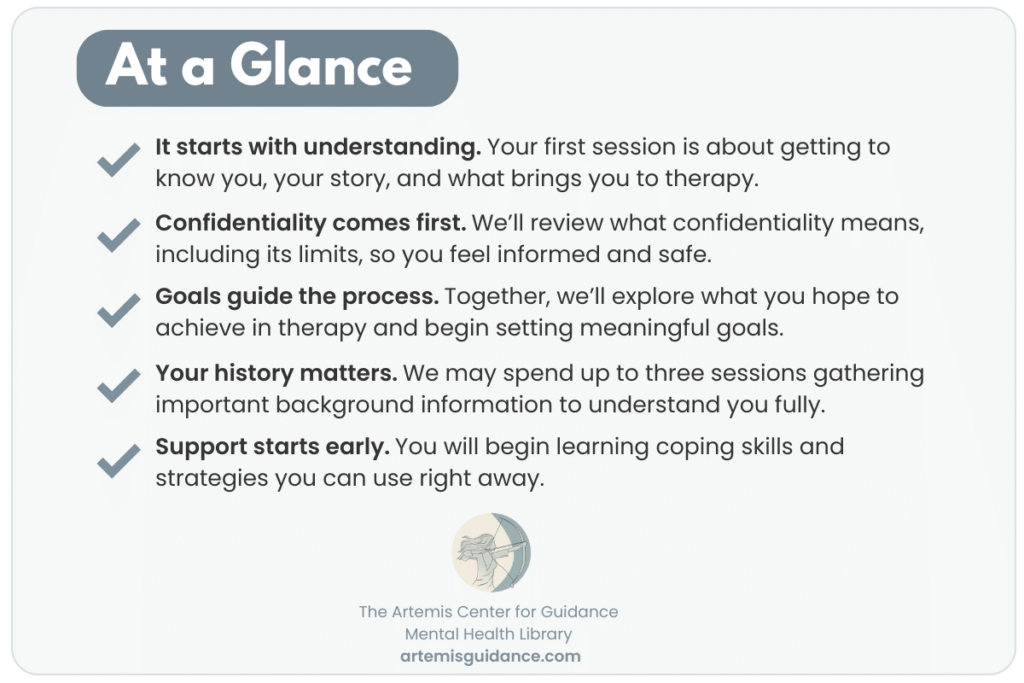
One of the first things we’ll review is confidentiality—what it means, why it matters, and the few situations where we’re legally or ethically required to share information in order to protect someone’s safety.
We’ll also review informed consent, answer any questions you have about the therapy process, and explain what you can expect moving forward.
Understanding these foundations helps create the trust that therapy depends on.
We’ll Spend Time Getting to Know You
Your first appointment isn’t about having all the answers.
It’s about helping us understand you.
We’ll ask about things like:
-
- What brought you to therapy
-
- Your current concerns and symptoms
-
- Your medical and mental health history
-
- Previous counseling experiences
-
- Important relationships and family history
-
- Your strengths and sources of support
-
- What you hope will be different through therapy
Many people worry they’ll have to tell their entire life story during the first appointment.
You don’t.
Some histories are straightforward. Others are more complex.
For some clients, gathering a complete history may take two—or occasionally three—sessions.
That’s completely normal.
We’ll Begin Setting Goals Together
Therapy is most effective when it’s collaborative.
Rather than telling you what you “should” do, your therapist will work with you to identify meaningful goals based on what’s most important to you.
Your goals might include:
-
- Feeling less anxious
-
- Improving relationships
-
- Feeling less overwhelmed
-
- Becoming more confident
-
- Building healthier coping skills
As therapy progresses, those goals may evolve—and that’s a normal part of the process.
We Don’t Believe You Should Have to Wait to Feel Better
While we’re taking time to understand your story, we also want you to begin experiencing relief as soon as possible.
Whenever it’s appropriate, your therapist will begin introducing practical coping skills early in treatment. Although developing a thorough understanding of your history sometimes takes more than one session, we don’t believe you should have to wait weeks before learning strategies that may help you start feeling better.
What If My Child Is Starting Therapy?
Children have different needs than adults, and our intake process reflects that.
For children approximately 10 years old and younger, we typically begin with a telehealth appointment that includes both the child and their parent or caregiver.
At the beginning of the appointment, we’ll spend time talking with the parent or caregiver about their concerns, the child’s history, and what they’re hoping therapy will help with. This gives caregivers an opportunity to speak openly about sensitive topics without worrying that their child is overhearing information that may be confusing, upsetting, or difficult to understand.
After that conversation, we’ll spend time getting to know your child and begin building a relationship with them. Depending on your child’s age, developmental level, and comfort, parents may remain involved for part of the session or we may spend some time with the child individually.
Every child is different, and we’ll tailor the process to meet your family’s needs while helping your child feel safe, comfortable, and supported from the very beginning.
There’s No “Right” Way to Start Therapy
Some people arrive with pages of notes.
Others aren’t sure where to begin.
Some know exactly what’s wrong.
Others simply know that something doesn’t feel right.
All of those experiences are normal.
You don’t need to prepare a speech.
You don’t need to have everything figured out.
You simply need to show up.
We’ll help guide the conversation.
Before Your First Appointment
You don’t need to prepare a speech or have everything figured out before you arrive.
To help your appointment go smoothly, we recommend bringing:
-
- Your insurance card (if you’re using insurance benefits)
-
- A photo ID, if requested
-
- A list of medications you’re currently taking
-
- Any questions you’d like to ask your therapist
Most importantly…
Bring yourself exactly as you are.
You don’t need to organize your thoughts, remember every detail of your history, or worry about saying the “right” thing.
That’s our job.